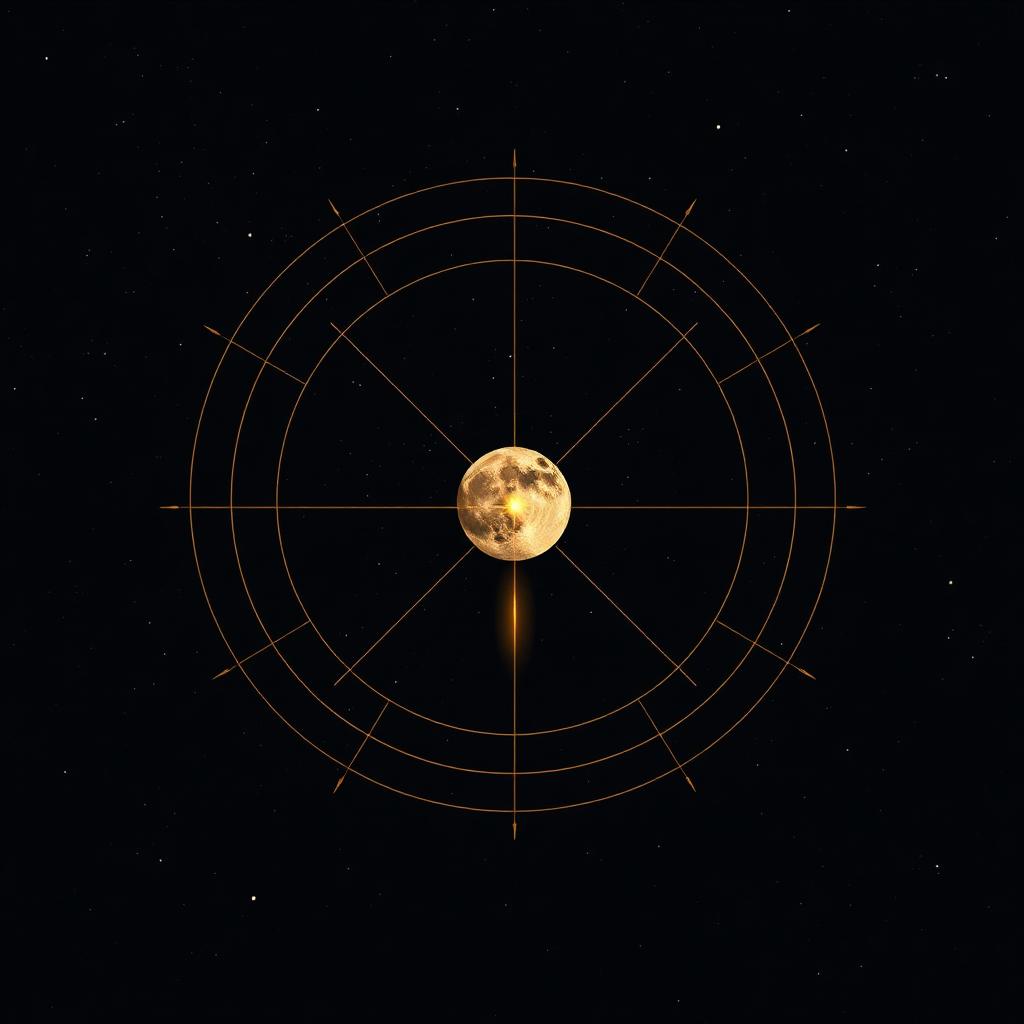
South Node
Calculated point
The other end of the axis — what is already well worn.
In the sky right now
Leo 28°01′
Ecliptic longitude 148.03°
Currently direct
Retrograde cycle
The South Node moves with the North Node, always exactly 180° away, travelling backwards through the zodiac over an 18.6-year cycle.
Astronomy
- What it is
- The point where the Moon's orbit crosses the ecliptic going south
- Cycle
- 18.6 years to travel the full zodiac
- Direction
- Backwards (retrograde) through the signs
- Opposite point
- Always exactly 180° from the North Node
- Eclipse link
- Solar and lunar eclipses cluster near both nodes
- Also called
- Cauda Draconis, the Dragon's Tail; Ketu in Vedic astrology
- Mean vs true
- This site uses the true node, corrected for periodic wobble
Planetary facts follow NASA and JPL reference data. Moon counts reflect IAU-recognised satellites as of August 2026. Zodiacal positions and retrograde stations are calculated live using the app's VSOP87/NOVAS-derived astronomy engine rather than being hard-coded. The lunar nodes shown are True (osculating) nodes, computed from the Moon's instantaneous orbital plane — the same convention Astro.com uses by default.
Greek & Roman mythology
Greek
Katabibazon (καταβιβάζων, 'the descending one')
Roman
Cauda Draconis (medieval Latin, 'Dragon's Tail')
In the Vedic account, Ketu is the body of the asura whose head became Rahu — separated at the same stroke, and likewise immortal. Where Rahu grasps, Ketu is associated with detachment, release and what has already been lived through.
European astrology received the pair as the Dragon's Head and Tail through Arabic transmission, keeping the serpent imagery but dropping the story behind it.
As with the North Node, there is no Greek or Roman deity behind this point. The classical names are descriptive astronomical terms.
In a natal chart
The South Node is read as what is already familiar to the point of being a default: inherited skill, comfort, and the habit a person falls back on under pressure.
It is interpreted together with the North Node as one axis, not as an isolated placement.
Like the North Node, it has no rulership or dignities.
Explore the rest of the sky
Don't write your paper based on this page. We keep the facts as accurate as we can, but moon counts get revised, missions rewrite the textbooks, and the live positions are computed on the fly — treat this as a reliable starting point, not a real-time oracle.